
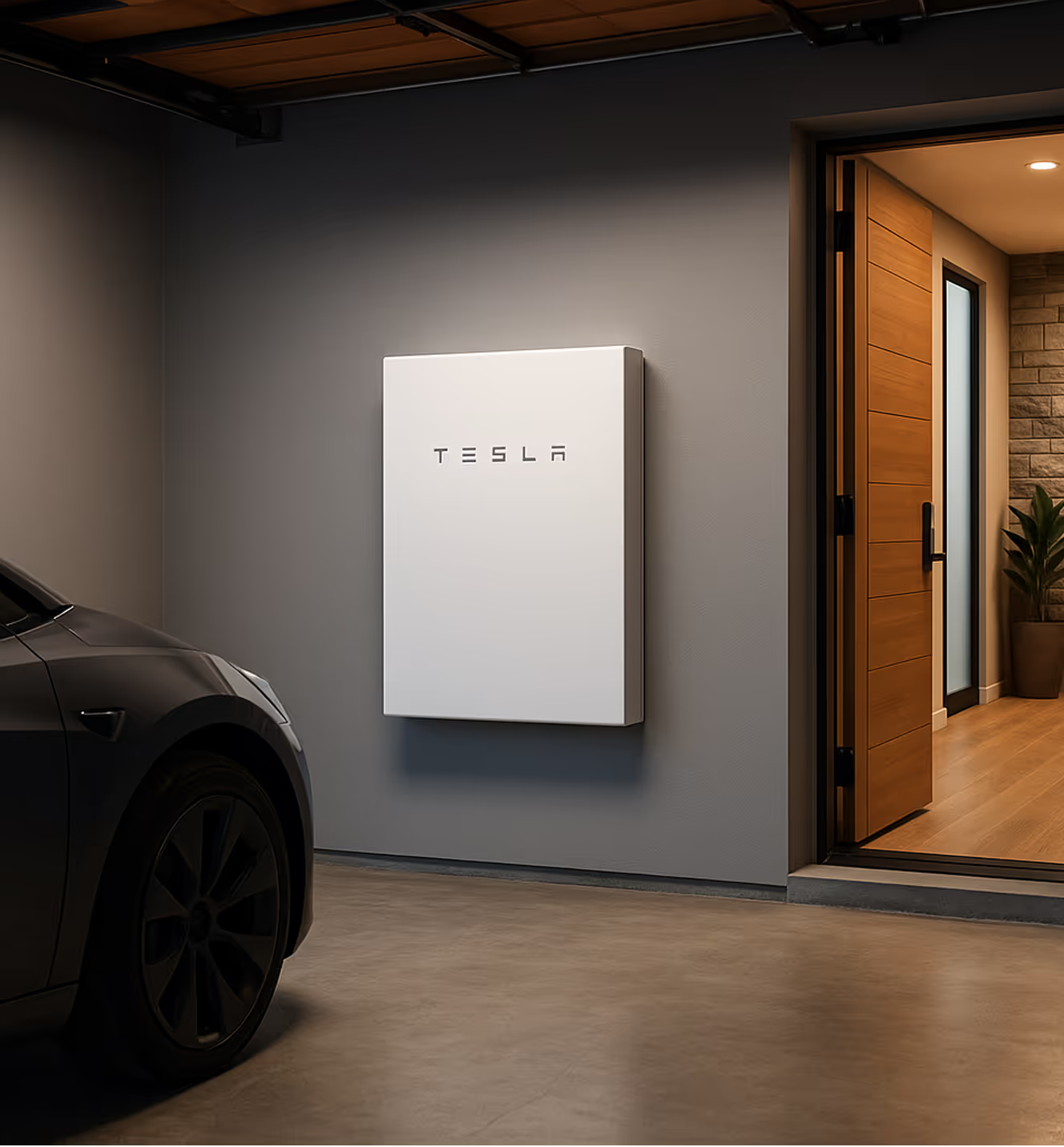
The short answer: for many Victorian homes, yes — a battery is now worth it, especially if you already have solar, export a lot of it during the day and use most of your power in the evening. The federal Cheaper Home Batteries discount has cut prices sharply, and with feed-in tariffs now only a few cents per kWh, every kWh you store and use yourself is worth several times more than one you export.
A battery is less likely to pay off if your evening use is low, your solar system is small or you’re not home much.
What a home battery costs in Victoria (2026)
| Battery size (usable) | Typical installed price after the federal discount |
|---|---|
| 5–7 kWh | ~$4,500–$7,000 |
| 10 kWh | ~$6,000–$10,000 |
| 13–16 kWh | ~$8,000–$13,000 |
| 20 kWh+ | Quoted individually — cheaper per kWh |
Indicative ranges as at October 2026. Most installed batteries land at roughly $650–$1,050 per usable kWh after the discount. Price depends on brand, whether a new hybrid inverter is needed, backup wiring and switchboard work.
How the federal battery discount works
The Cheaper Home Batteries Program gives an upfront discount on eligible batteries installed with solar. Like STCs, your installer claims it and takes it off your quote. There’s no income test.
Since May 2026 the discount is tiered by battery size:
| Usable capacity | Share of the full discount |
|---|---|
| First 14 kWh | 100% |
| 14–28 kWh | 60% |
| 28–50 kWh | 15% |
As at mid-2026 the full rate was worth roughly $250–$270 per kWh for the first 14 kWh — so a 10 kWh battery attracts a discount in the order of $2,500. The value moves with the certificate price, and the discount steps down every six months, with the next step on 1 January 2027. Full details in our 2026 rebates guide.
Why batteries make more sense in Victoria now
- Feed-in tariffs are low. Victoria removed its regulated minimum feed-in tariff in July 2025. Many retailers now pay only a few cents per kWh for exported solar.
- Evening power is expensive. Peak and shoulder rates are where most household bills are made. A battery shifts your cheap daytime solar into that window.
- The discount is at its most generous for typical home sizes. The tiered structure strongly favours batteries up to 14 kWh.
- Backup power. A battery set up for backup keeps lights, fridges, internet and other essentials running during outages.
Who a battery suits — and who should wait
A battery is usually a good fit if you:
- already have solar (or are installing it) and export a lot of it
- use most of your power in the evening and overnight
- have a large family, work from home part-time or run heating and cooking on electricity
- want backup during outages
- plan to stay in the home for years
It may be worth waiting if you:
- use very little power after dark
- have a small or older solar system that barely covers your daytime use
- are likely to sell within a few years
What size battery do you need?
Look at how much power you use between sunset and sunrise — your smart meter data shows this. Many Victorian homes use 8–15 kWh overnight, which is why 10–14 kWh of usable capacity is the sweet spot for many households, and it sits inside the full-discount tier.
Your solar system needs to produce enough spare energy to fill the battery. A 6.6 kW system in winter may struggle to fully charge a large battery, so we often recommend reviewing your panel capacity at the same time. See what size solar system do I need?
Battery payback: a realistic view
Batteries typically take longer to pay back than solar panels — commonly in the 7 to 12 year range — with faster payback for homes with high evening use and plenty of spare solar. Payback also depends on the battery’s warranty and how your retailer’s tariff works, so we model it from your actual usage rather than a rule of thumb.
Ready to see the numbers for your home? Get a free battery quote — we’ll size it from your usage data, apply the federal discount and show the payback. More on our solar battery installs.
Sources
- Cheaper Home Batteries Program — DCCEEW
- Clean Energy Regulator — Small-scale Renewable Energy Scheme
- Essential Services Commission — Victorian Default Offer 2026–27
Prices as at October 2026. General information only, not financial advice — your price and payback are confirmed in a written quote.